
Brakes spend most of their lives being remarkably undramatic. You press the pedal, the car stops, and everyone carries on. That's precisely how you want it. Regular Nissan brake service helps keep things that way.
Around Vancouver, WA, where wet roads are a regular part of driving, keeping those components in proper condition is particularly sensible. So, how do you know when your brakes want some attention?
What Are Those Noises Trying to Tell You?
Brakes can be surprisingly good communicators. A high-pitched squeal can indicate that brake pads are approaching the end of their useful life.
Grinding is more concerning and deserves prompt inspection because it can indicate that friction material has worn away and metal components are contacting one another.
Noise isn't the only clue. A brake pedal that feels soft or spongy, vibration while slowing, pulling to one side, or a noticeable change in stopping response are all reasons to schedule an inspection.
If your Nissan suddenly feels different when braking, don't wait for it to become louder before visiting our Nissan service department.
How Often Should You Have the Brakes Checked?
Brake wear depends heavily on how and where you drive, so there isn't a single interval that's perfect for every Nissan. An annual inspection is a useful general practice, while your owner's manual and Nissan maintenance schedule provide guidance for your specific model.
Drivers regularly dealing with stop-and-go traffic, hills, towing, or other demanding conditions may place greater loads on their braking systems. There's an easy way to make inspections less troublesome: combine them with maintenance you're already doing.
When your Nissan comes in for an oil change or tire rotation, ask the service team to inspect the brakes at the same time.
What Happens During Nissan Brake Service?
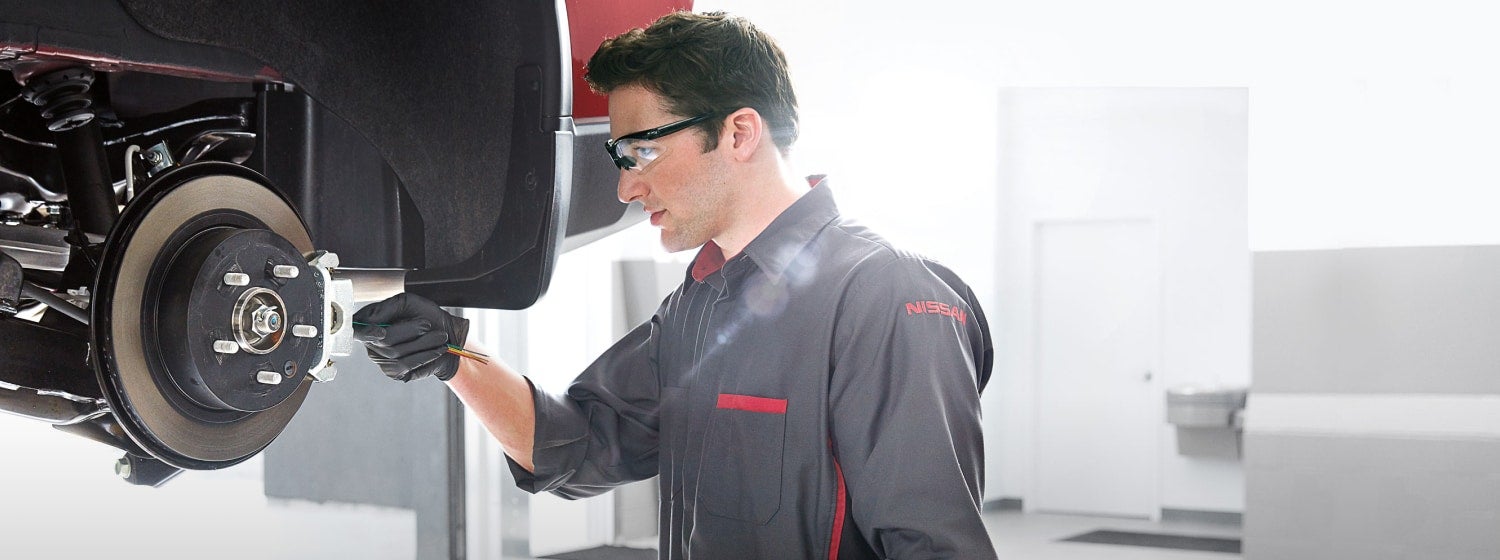
A proper brake inspection involves more than glancing through the wheel at the pads. Technicians can examine brake-pad thickness, rotor condition, calipers, and brake fluid while checking for signs of excessive wear, damage, or leakage.
Measurements help determine if components remain within appropriate specifications rather than relying on guesswork. If pads are worn, replacement may be recommended. Rotors can also require attention if they're excessively worn, damaged, or scored.
Brake fluid deserves its own inspection as well. Its condition is important to reliable hydraulic braking performance, so fluid service should follow the requirements established for your particular Nissan.
Why Use Genuine Nissan Brake Parts?
Brake components are engineered to work as a system, and fit, materials, and operating characteristics all count. Genuine Nissan brake parts are designed for Nissan vehicles and engineered to meet the specifications intended for the application. That provides a known fit and performance standard when replacement components are required.
Drivers comparing maintenance options can explore our Nissan parts department along with current service specials before scheduling their next appointment.
Can Vancouver's Rain Affect Braking?
Rain doesn't suddenly wear out a healthy braking system, but wet pavement can reduce available tire grip and increase the importance of having the entire vehicle prepared for the conditions. That means brake condition is only part of the picture.
Proper tire tread and inflation are also important because the brakes can slow the wheels, but the tires still have to transfer that braking force to the road. Regular Nissan maintenance gives technicians an opportunity to inspect these systems before Vancouver's next stretch of wet weather arrives.
Let Your Brakes Stay Boring
If your Nissan's brakes are making noise, the pedal feels different, or you're simply due for an inspection, explore our Nissan service options at Alan Webb Nissan in Vancouver, WA.
Check our current service specials, then schedule your Nissan brake service online and let our team inspect the system before a little warning becomes a much bigger one.